

The Biden-Harris administration’s customer experience (CX) efforts may finally be paying off. After four years of measurements that show declining satisfaction, citizen satisfaction with Federal government services surged by 4.6 percent in 2022, according to the American Customer Satisfaction Index’s (ACSI) Federal Government Report 2022. […]

The Defense Information System Agency (DISA) plans to begin limited user testing of the Department of Defense’s (DoD) first-ever cloud environment authorized to host classified data, the agency said on Jan. 31. […]

Artificial intelligence (AI) is an increasingly popular tool for employers across the United States utilize in their hiring processes, but this increasingly influential technology raises serious employment discrimination concerns, a Federal government official said this week. […]

The Federal Communications Commission (FCC) – in the midst of an ongoing revamp of how it builds and updates its national broadband maps – is in the process of gathering crowdsourced data from the public and considering how to use it to improve the mapping process. […]

Successfully implementing a zero trust architecture can oftentimes be a challenge for organizations, especially when there is a lack of buy-in at the executive level. To help clear that kind of hurdle, Federal officials say the secret sauce is developing a zero trust business case. […]

The Department of Defense’s (DoD) Chief Digital and Artificial Intelligence Office (CDAO) and the Joint Chiefs of Staff have relaunched the Global Information Dominance Experiments (GIDE) to help inform joint data integration solutions. […]

The White House has tapped Mark Latonero to serve in a new position at the Office of Science and Technology Policy (OSTP), as deputy director for the National AI Initiative Office. […]

Rep. Ted Lieu, D-Calif., is pulling out all the stops to get Congress to support regulating artificial intelligence (AI) technology, including by using an AI chatbot to write a resolution calling for those kinds of regulations. […]

The Cybersecurity and Infrastructure Security Agency’s (CISA) Joint Cyber Defense Collaborative (JCDC) said this week it will focus on three main priority areas in 2023: systemic risk, collective cyber response, and high-risk communities, according to its 2023 Planning Agenda released on Jan 26. […]

Robert Osmond, chief information officer (CIO) at the Virginia Information Technologies Agency (VITA), outlined this week how “agile everything” is the direction he wants the state tech agency to take with digital workflows. […]
The White House Office of Science and Technology Policy (OSTP) is developing a National Digital Assets Research and Development Agenda to study technologies that support cryptocurrencies and said this week it’s looking for comments to identify agenda priorities. […]

The Federal Communications Commission (FCC) has plenty of room to improve its Affordable Connectivity Program (ACP) – which offers discounted broadband services to eligible households – by strengthening its goals and measures, consumer outreach, and fraud-risk management, according to a new Government Accountability Office (GAO) report. […]
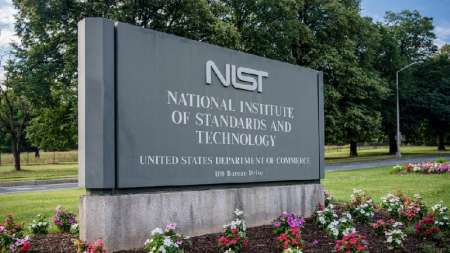
The National Institute of Standards and Technology (NIST) today launched the first version of the agency’s Artificial Intelligence (AI) Risk Management Framework (RMF), after spending 18 months developing the policy. […]

The White House-led National Artificial Intelligence (AI) Research Resource (NAIRR) Task Force is asking Congress for $2.6 billion to fund its plans to stand up a national research infrastructure that would broaden access to the resources essential to AI research and development (R&D). […]

The National Oceanic and Atmospheric Administration’s (NOAA) Cyber Security Division is seeking insight from industry on how to support the agency’s cybersecurity efforts. […]
A new report today from the Government Accountability Office (GAO) is calling on the National Telecommunications and Information Administration (NTIA) to develop comprehensive performance goals and measures, as well as a fraud risk assessment, for two new broadband programs that are pumping out billions of broadband funding nationwide. […]

Adoption of emerging technologies does not happen overnight, and needs to be accompanied by critical steps including fostering a culture of innovation, said Sanjay Koyani, chief technology officer at the Department of Labor, who talked about his agency’s emerging tech progress on Jan. 19. […]

The National Security Agency (NSA) on Jan. 18 published guidance to help the Department of Defense (DoD) and other system administrators identify and mitigate security issues associated with the transition to Internet Protocol version 6 (IPv6). […]

The Defense Logistics Agency (DLA) recently stood up a new data management division within the Office of the Chief Data and Analytics Officer (CDAO) that aims to offer “invaluable insights” going forward, CDAO Lindsey Saul said. […]

The Chips and Science Act is accelerating the work of a new Washington, D.C.-area quantum research consortium that is trying to create and operate a quantum network as a regional test bed, the body’s executive director said on Jan. 18. […]
The National Institute of Standards and Technology (NIST) has put together a concept paper with proposed revisions to its Cybersecurity Framework (CSF) and is looking for input on the changes before it crafts a draft of CSF 2.0. […]

From the very beginning of the COVID-19 pandemic, public health officials understood that using data to gather insights from otherwise inert information across the entire health ecosystem would improve public health outcomes, but raising the value of that data requires a lot of work, according to several public health officials. […]

The Department of Veterans Affairs (VA) is harnessing new technology that accelerates the time it takes clinicians to screen and diagnose veterans’ health problems, agency officials said on Jan. 18 at the AFCEA Bethesda Health IT Summit. […]

Federal Communications Commission (FCC) Chairwoman Jessica Rosenworcel warned in a Jan. 17 speech that the deployment of fifth-generation (5G) wireless communications networks involves big security and privacy challenges. […]
The U.S. Department of Health & Human Services (HHS) plans to release updated cybersecurity guidance for the healthcare industry along with an agency-wide data strategy in the upcoming weeks, according to Karl Mathias, chief information officer (CIO) at HHS. […]
The Cybersecurity and Infrastructure Security Agency (CISA) released its 2022 Year in Review report this week, highlighting the agency’s increased collaboration with industry partners. […]

An expert on U.S.-China relations said this week that when it comes to tech, the United States excels at inventing, but China beats out the U.S. in terms of applying new tech. […]

The U.S. Department of Transportation (DOT) on Jan 11. released its strategic plan establishing the agency’s vision for research and technology deployment to help transform the nation’s transportation system over the next five years. […]
The National Archives and Records Administration (NARA) today published an update to the government’s records retention rules, which provides Federal agencies with new instructions on how long to hang on to cybersecurity logs. […]

Technologies such as artificial intelligence (AI), facial recognition, and drones are poised to improve law enforcement by making police more productive and effective, but their deployment also needs to be accompanied by new thinking and possible downsides, including bias and cybersecurity, a Jan. 9 report from the Information Technology and Innovation Foundation (ITIF) says. […]