

The Department of Commerce is seeking comment on questions related to the development of regulations to govern process and procedures the Commerce Secretary will use to deter foreign malicious cyber actors’ use of U.S. Infrastructure as a Service (IaaS) products and investigate foreign malicious cyber actors. […]
Federal agencies are on the clock to transition networks and systems to using Internet Protocol version 6 (IPv6), and the Cybersecurity and Infrastructure Security Agency’s (CISA) Trusted Internet Connection (TIC) program office released draft guidance to help agencies transition securely. […]

The fiscal year (FY) 2022 National Defense Authorization Act (NDAA) passed the House of Representatives late Sept. 23 with a bipartisan 316-113 vote. Among the amendments are a number of tech provisions focusing heavily on cybersecurity, along with some focusing on the digital workforce, cloud, and AI. […]

Closer integration between cybersecurity teams and enterprise risk management staff could help Federal agencies avert catastrophic cyber breaches more effectively, according to a new study published on September 23 by the Partnership for Public Service and Deloitte. […]
The Federal Communications Commission (FCC) announced that it committed more than $1.2 billion in funding to ensure that more than 3.6 million students have access to broadband and devices needed to engage in off-campus learning. […]
Federal agencies should begin fully describing public comment data and their limitations, despite agencies not being required to collect information on or to verify commenters’ identities. […]

With a growing number of advanced threats across the Federal landscape, Small Business Administration (SBA) Chief Technology Officer Sanjay Gupta, encouraged agencies to view cybersecurity as a “team sport” and a proactive sport to gain a better cyber posture. […]
The Technology Modernization Fund (TMF) got a $1 billion boost in March’s American Rescue Plan, and the TMF board saw a massive influx of TMF requests that it has been working on adjudicating. At a Senate Homeland Security and Governmental Affairs hearing today, Federal chief information security officer (CISO) Chris DeRusha updated senators on the status of that extra TMF funding. […]

The Department of Defense (DoD) has announced that Verizon Public Sector will be delivering 5G Ultra-Wideband mobility service to seven Air Force Reserve Command (AFRC) installations based in California, Florida, Massachusetts, New York, Ohio, Pennsylvania, and Texas. […]

As part of a government-wide effort to counter ransomware, the U.S. Department of the Treasury is taking robust actions to disrupt criminal networks and virtual currency exchanges responsible for laundering ransoms, encourage best cyber practices, and increase efficient and timely incident reporting to agencies. […]
After a two-day meeting that included deciding which amendments to the fiscal year (FY) 2022 National Defense Authorization Act (NDAA) will receive votes, the House Rules Committee ruled several cybersecurity provisions to see floor votes when the measure comes up. […]

It’s important to hold adversaries accountable for recent cyber incidents, but Carole House, the director of cybersecurity and secure digital innovation on the White House National Security Council (NSC) stressed that “we need to hold ourselves accountable to the shortcomings” at home as well. […]

A new agreement led by the Commonwealth of Massachusetts will allow eight neighboring states and Washington, D.C., to offer Internet access, devices, and other technology to constituents through local agencies at a discounted rate via Verizon’s Digital Inclusion Program. […]

The ongoing COVID-19 pandemic, along with other natural disasters, forced the Environmental Protection Agency (EPA) to shift to remote work. In a new report, the agency’s Office of Inspector General (OIG) said that the EPA was able to effectively plan a long-term solution to address remote access concerns while also transitioning to the General Services Administration’s (GSA) Enterprise Infrastructure Solutions (EIS) contract. […]

The Department of Defense (DoD) has made progress in implementing a new electronic health records (EHR) system, but some challenges remain, the Government Accountability Office (GAO) says. […]

Savannah River National Laboratory (SRNL) has opened a Critical Infrastructure, Industrial Control System Cybersecurity Laboratory at the Georgia Cyber Center. […]

At the highest levels of the Federal government and the private sector, officials have recognized that cybersecurity is a national security issue. A series of policy and technical documents and high-level meetings this year have reinforced this notion. Chief among them is President Biden’s cybersecurity executive order (EO), which outlines a wide-ranging and ambitious series of actions Federal agencies must take to better secure government operations. MeriTalk recently talked with Jim Richberg, field chief information security officer at cybersecurity firm Fortinet, who is uniquely qualified to assess the potential impact of the cybersecurity EO and the actions that agencies must take to realize its promise. Prior to joining Fortinet, Richberg was the senior federal executive focused on cyber intelligence within the U.S. intelligence community. He helped build the discipline of cyber threat intelligence analysis and is an innovator in measuring cyber performance, risk, and return on investment. […]
A Senate Homeland Security Committee hearing brought together several experts from the intelligence community today to discuss the homeland security landscape 20 years after the terrorist attacks on Sept. 11, 2001. […]

The American Federation of Government Employees (AFGE) now supports Rep. Jimmy Panetta’s, D-Ca., National Defense Authorization Act (NDAA) amendment that would create a Civilian Cyber Reserve at the Department of Homeland Security (DHS), AFGE announced in a follow-up letter on Sept. 18. […]

The American Federation of Government Employees (AFGE) wrote the leaders of the House Rules Committee Sept. 15 to express their opposition to amendments to the fiscal year (FY) 2022 National Defense Authorization Act (NDAA) that would create a civilian cyber reserve program. […]

As we approach the home stretch for the two trillion-dollar-plus infrastructure bills that have consumed an extraordinary amount of legislative energy over the past few months, it’s easy to become confused. […]

With attacks on critical infrastructure increasing, Rep. Jim Langevin, D-R.I., chairman of the House Armed Services Subcommittee on Cyber, Innovative Technologies, and Information Systems, is calling for improved security of critical systems and increased cybersecurity collaboration among the private and public sector. […]
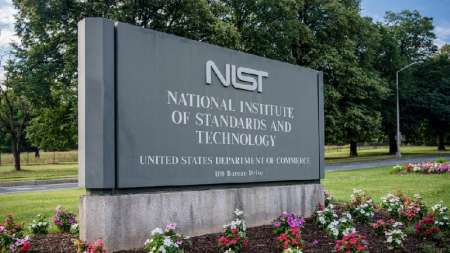
A request for information (RFI) by the National Institute of Standards and Technology (NIST) developing a framework to improve the management of risks to individuals, organizations, and society associated with AI received feedback to assist in its development. […]
With fiscal year (FY) 2021 ending September 30, the House Rules Committee will be meeting on September 20 to decide which of the over 800 amendments filed for the FY2022 National Defense Authorization Act (NDAA) will get a floor vote. […]
The Department of Homeland Security (DHS) Office of Inspector General (OIG) says that the Cybersecurity and Infrastructure Security Agency (CISA) needs to update plans for protecting critical infrastructure. CISA Director Jen Easterly said that an updated plan will be in by Sept. 30, 2022. […]

The National Institutes of Health (NIH) has invested “proactively and preemptively” in technology, so that when the coronavirus pandemic hit NIH it was able to seamlessly transition to a telework environment, according to the NIH CIO and Director of the Center for Information Technology, Andrea Norris. […]
Richard Bird is an Army veteran and an internationally recognized identity-centric security expert who has been a CIO and CISO and the global head of identity for JP Morgan Chase. Now, he is chief customer information officer for Ping Identity. […]
The Department of Defense (DoD) has signed a seven-year, $374 million contract with Concur Technologies that makes the company the sole source for DoD’s Defense Travel Modernization (DTM) project, DoD announced Sept. 15 on SAM.gov. […]

A new government watchdog report finds that further analysis of U.S. Postal Service (USPS) injury-related data based on career status could help the agency reduce injuries, particularly for non-career employees. […]

The General Services Administration (GSA) is working on setting up a Cloud Marketplace for Federal agencies, with the first phase of the project coming in fiscal year (FY) 2022 and a request for information also being worked on, a GSA official said today. […]