

Former U.S. Secretary of Defense Ash Carter said cybersecurity risks are a “very serious matter” and called for stronger retaliation from the U.S. government and Department of Defense (DoD) against malicious cyber actors. […]

The National Institute of Standards and Technology (NIST) is looking for information on the trends and future investment needs for eight emerging technology sectors to complete a study authorized in the fiscal year (FY) 2021 appropriations act, according to a request for information (RFI) posted to the Federal Register Nov. 22. […]

The Department of Homeland Security’s (DHS) Customs and Border Protection (CBP) organization is working up a solicitation for a cloud management contract to be released in 2022, according to a posting on SAM.gov. […]

A new report from Booz Allen Hamilton warns that sophisticated threat actors including China are likely to soon start stealing encrypted data from the U.S. government and private sector in the hopes of being able to decrypt the data years from now using quantum computing technologies. […]

As the Federal government continues to focus on boosting the nation’s cybersecurity hygiene, Cybersecurity and Infrastructure Security Agency (CISA) Director Jen Easterly said Nov. 18 that visibility and modernization are the keys to improving the nation’s cybersecurity posture. […]

The Department of Housing and Urban Development (HUD) can do a better job at estimating the level of homelessness in U.S. communities by better leveraging data, a new Government Accountability Office (GAO) report has found. […]
The United States Postal Regulatory Commission is working to hire its first-ever chief data officer (CDO) and establish a Data Governance Board, Michael Kubayanda, nominee for commissioner at the Postal Regulatory Commission, told a Senate committee. […]

The Cybersecurity and Infrastructure Security Agency (CISA) and the FBI issued a cybersecurity advisory today, warning public and private sector organizations to stay vigilant for ransomware attacks and other cyberattacks leading up to and during the holiday season. […]
After a potential setback late last week, Sens. Gary Peters, D-Mich., and Rob Portman, R-Ohio, are still looking to attach their legislation to reform the Federal Information Security Modernization Act (FISMA) added to the Senate’s fiscal year (FY) 2022 National Defense Authorization Act (NDAA) making its way through the chamber, a Senate Homeland Security and Governmental Affairs Committee staffer told MeriTalk. […]

The Cybersecurity and Infrastructure Security Agency (CISA) has launched its Infrastructure Dependency Primer (IDP) learning tool, which aims to help state, local, tribal, and territorial planners and decisionmakers better understand how infrastructure dependencies can impact their communities and how to increase resilience. […]

The complexity and flexibility of emerging fifth-generation (5G) wireless technologies make the process of defining a security assessment boundary complex, thus it’s crucial to maintain a wide aperture concerning 5G cybersecurity, an official from the Cybersecurity and Infrastructure Security Agency (CISA) said during a Palo Alto Network webinar on Nov 18. […]

The Government Accountability Office (GAO) recently spoke with technology leaders from government, academia, and nonprofits to discuss the efficacy of establishing a new service academy focused on training future digital civil servants, and found that tech leaders have significant concerns about the outcome of such an effort. […]

The Cybersecurity and Infrastructure Security Agency (CISA) will be rolling out a new protected Domain Name System (DNS) technology in 2022, CISA’s Trusted Internet Connections (TIC) program lead Sean Connelly said on Nov. 18. […]

The Defense Department (DoD) said today it has invited four major cloud service providers – Amazon Web Services, Google, Microsoft, and Oracle – to bid on its proposed multi-vendor Joint Warfighter Cloud Capability (JWCC) contract. […]

The Office of the National Cyber Director has hired Rexford G. “Rex” Booth as its senior policy advisor, according to Booth’s LinkedIn. […]

The Department of Justice (DoJ) announced it has charged two Iranian nationals for their role in a cyber-enabled disinformation and threat campaign “to intimidate and influence American voters, and otherwise undermine voter confidence and sow discord” in the 2020 U.S. presidential election. […]

The House of Representatives passed the Build Back Better (BBB) Act this morning, sending the more than $1.75 trillion reconciliation package to the Senate. The bill includes billions for supply chain resiliency, as well as additional cybersecurity and IT modernization funding. […]
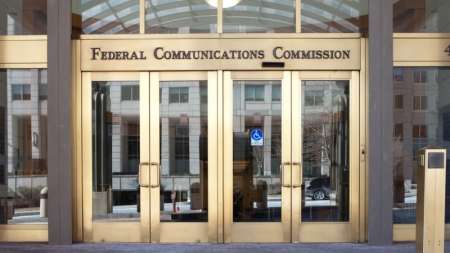
To help close the broadband digital divide, the Federal Communications Commission (FCC) has proposed an enhanced competition incentive program to encourage licensees to offer opportunities for small carriers and Tribal Nations to obtain spectrum via lease, partition, or disaggregation. […]
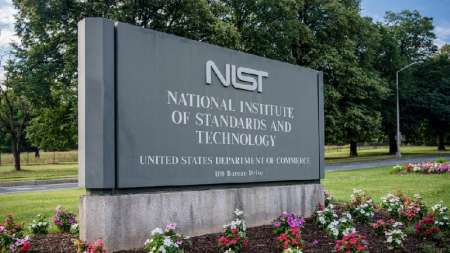
The Senate Commerce, Science, and Transportation Committee voted Nov. 17 to approve President Biden’s nomination of Laurie Locascio to become Undersecretary of Commerce for Standards and Technology, and director of the National Institute for Standards and Technology (NIST). […]
The Cybersecurity and Infrastructure Security Agency (CISA) and the National Security Agency (NSA) said today they published new guidance to mitigate cyber threats within 5G cloud infrastructure. […]

U.S., U.K., and Australian cybersecurity agencies are warning that hackers associated with Iran have exploited vulnerabilities in Fortinet and Microsoft products to carry out attacks. Officials urged in a recent advisory that critical infrastructure organizations patch these vulnerabilities to mitigate against possible attacks. […]
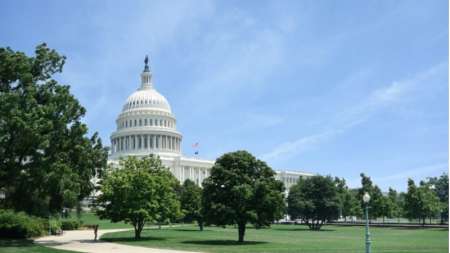
Democratic leaders in both chambers of Congress announced Nov. 17 that they will form a conference committee to resolve differences between the Senate-passed United States Innovation and Competition Act (USICA) and the House-passed National Science Foundation (NSF) for the Future Act – thus creating a pathway to passage for the supply chain and research investment bills. […]
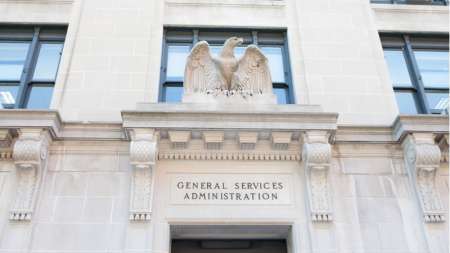
The General Service Administration’s (GSA) Office of Evaluation Sciences (OES) completed its 100th collaboration across the Federal government and is using the data gleaned from its collaborations to push Federal digital services forward, GSA announced Nov. 16. […]

To become more efficient and effective in their operations, many Federal agencies have begun to adopt new robotic process automation (RPA) processes. However, concerns remain on the adoption of RPA, Federal officials said during a Brookings Institute webinar on November 16. […]

Significant tax benefits can occur when taxpayers invest in Qualified Opportunity Funds, which invest in Opportunity Zones that were created by Congress, and the IRS says that over 6,000 of these funds invested about $29 billion in Opportunity Zones through 2019, but plans to ensure funds comply with requirements depend on data that isn’t readily accessible. […]

An FBI official did not deny prior reports that the agency held the decryption key from the Kaseya ransomware attacks for multiple weeks without giving it to parties victimized by the attacks but told the House Oversight and Reform Committee at a Nov. 16 hearing that it chose to do so in the interest of figuring out how to achieve the widest-ranging impact from the key. […]

The Defense Innovation Unit (DIU) published a comprehensive framework on responsible usage of artificial intelligence (AI) to help Federal officials and contractors align technology and AI programs with the Department of Defense’s (DoD) Ethical Principles for AI. […]

The Federal government has transitioned from a “Cloud First” to a “Cloud Smart” strategy intended to guide agencies in leveraging cloud technology without compromising security. However, accomplishing this is a team effort, Federal officials said during a SCGov panel discussion on November 16.

The Department of Homeland Security’s (DHS) Cybersecurity and Infrastructure Security Agency (CISA) released new Cybersecurity Incident and Vulnerability Response Playbooks today, completing a vital assignment from President Biden’s Cybersecurity executive order (EO). […]

The Biden administration issued its cybersecurity executive order (EO) in May 2021, giving marching orders to Federal agencies to move to zero trust security architectures, among other directives. During a SCGov panel discussion today, Federal chief information security officers (CISOs) shared how they’re leveraging their agency’s previous programs around zero trust to fulfill the obligations of the EO. […]