
The Department of Commerce (DOC) is in the process of building an IT services contract to be used agency-wide, and is seeking contractors who can deliver solutions to securely operate and manage the current IT infrastructure. […]

As the COVID-19 pandemic forced Federal agencies to quickly move to a remote environment, Federal and private sector leaders say the shift to telework provided valuable benefits, such as increased leadership and employee engagement, as well as digital savviness among employees. […]
The Department of Homeland Security’s (DHS) Cybersecurity and Infrastructure Security Agency (CISA) is still looking for a permanent lead for its Continuous Diagnostics and Mitigation (CDM) program, but Richard Grabowski, the program’s deputy lead, has been elevated to acting program manager in the meantime, CISA told MeriTalk. […]

The United States Air Force (USAF) – like the rest of the Federal government – has focused a great deal of energy on IT modernization. Those efforts resulted in the sunsetting of 221 legacy IT systems over the past four years, a USAF official shared along with other insights during the inaugural Coffee Chat event organized by MeriTalk and Amazon Web Services. […]
Cloud service behemoths Amazon Web Services (AWS) and Microsoft appear to be squaring off once again over a big Federal government cloud contract – this time a deal awarded by the National Security Agency (NSA) to AWS. […]

For some Federal agencies, taking a hybrid approach to cloud modernization is the best path forward in protecting data, as well as helping to manage costs. […]

As the number of cyberattacks continues to rise, Federal experts say information sharing between the private and public sectors is critical when it comes to defending against cyber threats. However, experts are warning agencies that they need to start getting more specific on their information sharing needs if they want to achieve “a joint end-state” with industry. […]

Infrastructure week finally arrived in Washington, D.C. with the Senate’s approval of the $1 trillion Infrastructure Investment and Jobs Act on Tuesday morning. The bill – whose main tech-related titles include $65 billion for broadband and around $2 billion for cybersecurity – cleared the Senate by a vote of 69-30. […]

The National Archives and Records Administration (NARA) released a 2022-2026 Strategic Plan draft to maximize digital records’ access and availability, including a top-line goal of digitizing a half billion pages of records. […]
Following a pair of votes on the Infrastructure Investment and Jobs Act over the weekend, the bipartisan infrastructure measure is nearing the finish line in the Senate. The bill is currently on track for a final vote in the Senate on Tuesday morning. […]

A recent study found a host of vulnerabilities in the use of open-source components in commercial off-the-shelf (COTS) IT products, which undergo less stringent regulation in their use by the Federal government. […]

The Department of Health and Human Services (HHS) created a new data system in April 2020 to deal with collecting data on whether hospitals have enough beds and supplies during the COVID-19 pandemic. However, during the pandemic, HHS changed its data collection methods and requirements—making it difficult for hospitals to report data. […]

The Senate Committee on Homeland Security and Governmental Affairs signed off on a number of cybersecurity-related bills and a Department of Homeland Security (DHS) supply chain bill during an August 4 business meeting, sending the bills to the Senate floor for a vote. […]

The U.S. Army is searching for a cloud-based platform that it can use to simulate a real-world attacker hitting the Department of Defense Information Network (DoDIN). […]
The Senate Committee on Commerce, Science, and Transportation approved two bills during an Aug. 4 business meeting, one to ensure that the Federal Communications Commission does not approve radio frequency devices that pose a national security risk, and another to advance the adoption of composite technology. […]
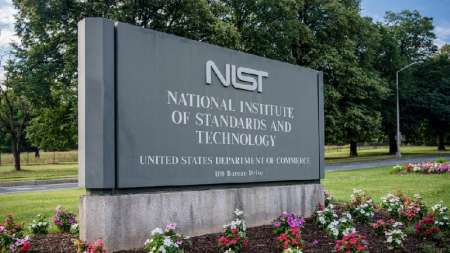
The National Institute of Standards and Technology (NIST) is seeking comment on a draft special publication (SP) on assessing security and privacy controls. […]

The Department of Homeland Security’s (DHS) Cybersecurity and Infrastructure Security Agency (CISA) today announced its Joint Cyber Defense Collaborative (JCDC) initiative which to use collaboration to drive down cyber risks faced by Federal agencies, state and local governments, and the private sector. […]

The Department of Homeland Security (DHS) Science and Technology Directorate (S&T) released an artificial intelligence (AI) and machine learning (ML) strategic plan that will look to outline the DHS approach to using these emerging technologies. […]
Chris Cleary, the principal cyber advisor at the Department of the Navy, called cybersecurity an “infinite game” today and stressed that the United States will lose that game if it does not have the adequate funding or resources to continue the fight against adversaries. […]

A report from the Office of Inspector General (OIG) at the Federal Deposit Insurance Corporation (FDIC) found that the FDIC has not established and implemented effective controls to secure and manage its mobile devices. […]
The Senate’s Infrastructure Investment and Jobs Act – the bipartisan infrastructure plan currently working its way through the amendment process – totals about $2 billion in cybersecurity funding, the White House said in an August 3 fact sheet about the legislation. […]

The National Security Agency (NSA) recently released guidance for the National Security System (NSS), Defense Department (DoD), and defense industrial base to help identify vulnerable internet connections and protect common wireless technologies while working on public networks. […]

The Senate Homeland Security and Governmental Affairs Committee took seven Federal agencies to task in a report issued today for failing to make sufficient progress on a range of cybersecurity-related problems since the committee last examined security at those agencies in 2019. […]

As the Department of Defense (DoD) looks to accelerate the move to an enterprise cloud environment, experts say to focus on speeding application modernization, rather than the specific cloud solution itself. […]
Senators introduced bipartisan legislation this week aimed to strengthen the United States’ cybersecurity posture and protect the nation’s Systemically Important Critical Infrastructure (SICI). The bill includes several key recommendations from the Cyberspace Solarium Commission (CSC). […]
Chris Inglis, the nation’s first-ever national cyber director, has called for the establishment of a Bureau of Cyber Statistics, which would exist within the Department of Homeland Security, to collect and publish cybersecurity statistics to properly understand cyber threats and how to address them. […]

The Department of Veterans Affairs (VA) awarded a seven-year, $497 million contract to enterprise IT provider Peraton to provide IT infrastructure-as-a-managed-service (IaaMS), the firm announced August 2. […]
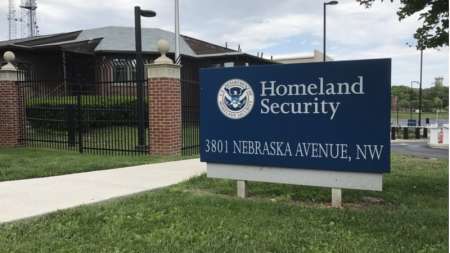
New legislation from Sens. Gary Peters, D-Mich., and Rob Portman, R-Ohio, would create a new task force at the Department of Homeland Security (DHS) to combat deepfake technologies. […]
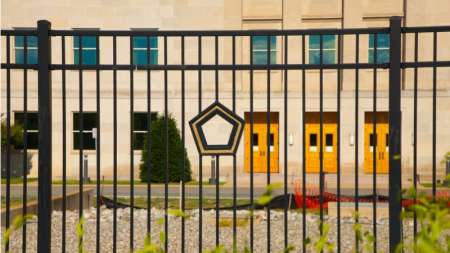
The Department of Defense (DoD) still has more work to do in properly coding its filled and vacant positions for its civilian cyber workforce, the DoD Inspector General (IG) said in a report made public August 2. […]

Sens. Gary Peters, D-Mich., and Rob Portman, R-Ohio, have introduced bipartisan legislation to improve the Federal workforce’s understanding of AI and ensure its ethical and safe use. […]