
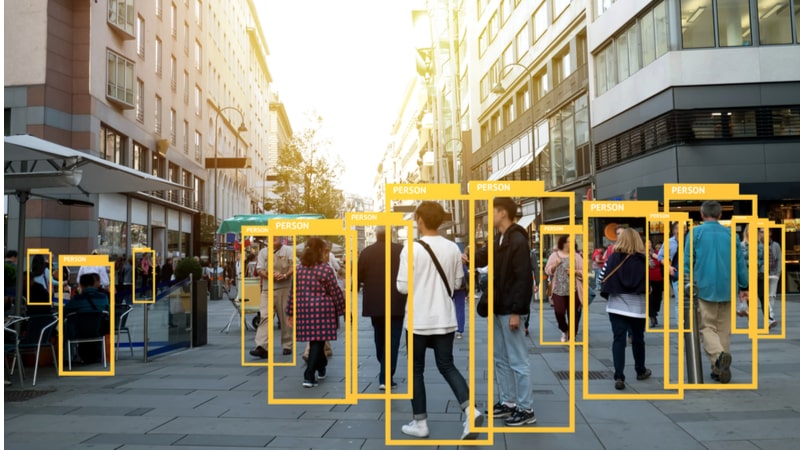
A new legislative proposal from the House Homeland Security ranking member would restrict how immigration enforcement agencies use mobile biometric technology.
Rep. Bennie Thompson, D-Miss., introduced the Realigning Mobile Phone Biometrics for American Privacy Protection Act on Friday to regulate how immigration units within the Department of Homeland Security (DHS) can use facial recognition technology to screen individuals in the field.
The legislation centers on Mobile Fortify, an application first reported last fall that allows Immigration and Customs Enforcement (ICE) agents to use facial recognition technology to scan faces and retrieve information on individuals captured by their mobile devices’ cameras.
In two separate letters, lawmakers pressed ICE for details on the technology, including how it was tested, when it was first used, and whether it is legal.
“When ICE claims that an image its snaps and runs through an unproven app can be enough evidence to detain people for possible deportation, no one is safe,” Thompson said in a statement about his proposal. “ICE’s use of Mobile Fortify to determine a person’s legal status is an outrageous affront to the civil rights and civil liberties of U.S. citizens and immigrants alike.”
“DHS should not be conducting surveillance by experimenting with Americans’ faces and fingerprints in the field – especially with unproven and biased technology. It is time to put an end to its widespread use. We can secure the Homeland and respect the rights and privacy of Americans at the same time,” he added.
The legislation would require DHS to establish standards and guidelines for privacy, civil rights, and civil liberties; prohibit the department from using Mobile Fortify except for at ports of entry; ban DHS from sharing similar apps outside of the department; and require that the apps be removed from DHS systems and made inoperable on non-DHS systems.
In addition, the legislation would mandate the destruction of any biometric information of a U.S. citizen captured previously by the app.
The proposal is cosponsored by Reps. Lou Correa, D-Calif., Shri Thanedar, D-Mich., Yvette Clarke, D-N.Y., Grace Meng, D-N.Y., and Adriano Espaillat, D-N.Y.
“Using an unproven technology in the United States to determine a person’s citizenship or legal residency is dangerous. This sets a dangerous precedent,” Correa said in a statement.