
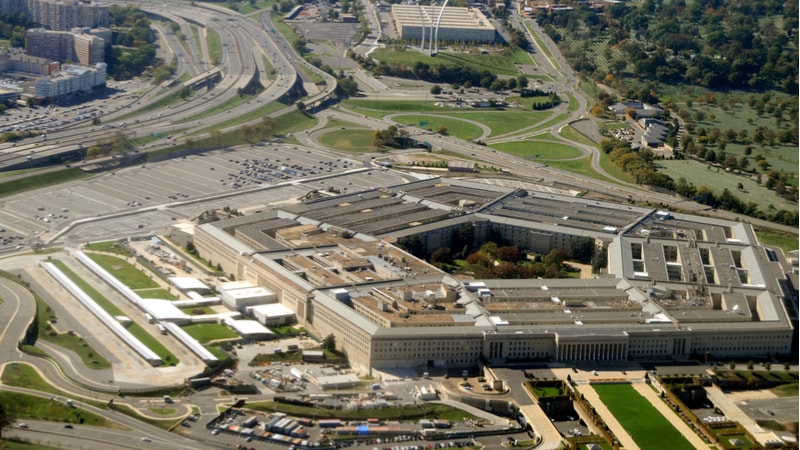
The Pentagon’s ability to carry out military missions is increasingly dependent on the security of operational technology (OT). But defense officials warn that as these systems become more networked, cyber threats are growing in scale and sophistication – requiring predictive monitoring and resilient architectures across the Defense Department (DOD), rebranded as the War Department by the Trump administration.
Against this backdrop, senior leaders say protecting OT is no longer a niche technical concern but a core element of mission assurance.
Rear Adm. Tracy Hines, deputy director of global space operations at U.S. Space Command, said space operations are facing a rise in non-kinetic threats as OT becomes more interconnected with commercial and enterprise systems.
As a result, “understanding and securing these systems is essential to maintaining operational readiness,” Hines said during a webinar on Tuesday.
To address these challenges, Hines stressed the need for predictive and proactive cybersecurity strategies. These include identifying precursor behaviors and anomalies before they escalate into mission-impacting incidents.
“We’re focused on applying proven cybersecurity fundamentals such as asset inventory, network segmentation, and continuous monitoring,” Hines said, noting that these practices must be adapted to meet the high-availability requirements unique to OT.
Hines also highlighted the importance of public-private partnerships in strengthening OT security. Collaboration with industry, she said, is critical for technology integration, innovation, and managing supply chain risk.
“We are all in this together,” Hines said. “Strong partnerships improve visibility into product security and support coordinated vulnerability disclosure.”
In addition, Hines pointed to the growing role of artificial intelligence (AI), describing it as an “assistant” rather than a replacement for human decision-making.
“AI can help with tasks such as anomaly detection, threat identification, and incident response,” she said. “However, human operators remain responsible for validating outputs.”
Echoing these themes, Jeffrey Sanders, a project manager in the Cyber Security Program Office at the Naval Information Warfare Systems Command (NAVWAR), outlined the Navy’s efforts to secure OT systems across submarines, surface ships, aircraft, and shore facilities.
These systems, Sanders explained, control critical functions such as propulsion, navigation, weapons, and aviation operations – making them high-value targets for adversaries.
“Cyber threats to them could prevent mission execution,” he said.
While networking OT systems has introduced new risks, Sanders noted that it has also enabled modernization, including remote monitoring and continuous updates.
To manage this complexity, the Navy is shifting toward centrally managed cyber defense through cybersecurity service providers, reducing reliance on individual sailors to handle complex mitigation tasks.
“This approach allows for more consistent and scalable protection,” Sanders said.
He added that training, standardized playbooks, and continuous testing are essential, along with practices such as out-of-band cyber defense and regular red teaming.
Looking ahead, Sanders emphasized the importance of zero trust architecture, platform-wide security designs, and integrating security into systems from the outset rather than retrofitting it later.